

Colégio Sidarta
Secular, Founded 1998
Updated July 2026
Languages
 English
 Spanish
Colégio Sidarta is an experiential, bilingual school located in Cotia, São Paulo, that focuses on forming autonomous and socially responsible students. As an application school for the Instituto Sidarta, it integrates active methodologies and social projects to prepare students for a constantly changing world.
Curriculum
Teaching approach
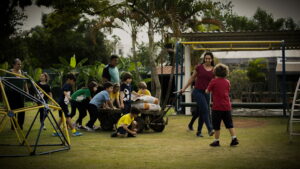
Founded in 1998, the school is based on the principle that education should be experiential, dynamic, and relevant to life. It values diversity, the unity within that diversity, and the importance of service to society as a core component of citizenship. The school encourages students to be autonomous, viewing them as 'subjects' of their own lives rather than passive consumers of information.
Programmes
The school organizes its curriculum into three cycles: Cycle 1 (Early Childhood Education to 3rd grade), Cycle 2 (4th to 7th grade), and Cycle 3 (8th grade to 3rd year of High School). The programme is bilingual, featuring an English immersion approach in Early Childhood Education and expanded hours through High School, alongside Spanish instruction starting in the 3rd grade. The curriculum also includes project-based learning, technology electives, and 'Expedições Sidarta', which are field trips designed to provide practical, real-world learning experiences.
Outcomes
Students are prepared for both national and international academic success, with many achieving proficiency in English through regular exams starting in the 5th grade. Graduates have the opportunity to obtain the TOEFL C1 diploma, which is internationally recognized for university entrance. Beyond academics, the school aims to form autonomous, socially responsible individuals capable of acting as agents of transformation in society.
Student support
Learning support
The school emphasizes personalized attention, with teachers acting as mentors and guides who develop individual teaching plans to help students reach their potential. A structured 'Jornada de Autogestão' (Self-Management Journey) programme is integrated into all cycles to support students' cognitive, ethical, and emotional development through assemblies, ethics, study habits, and social-emotional learning.
Frequently asked questions(3)
- What ages does Colégio Sidarta teach?
- Colégio Sidarta enrolls students aged 3 to 17.
- Is Colégio Sidarta co-educational?
- Colégio Sidarta is a co-ed school.
- Where is Colégio Sidarta located?
- Colégio Sidarta is an international school in Osasco, Brazil.
Tuition & fees
No published fee schedule was found for this school.
Admissions
Prospective families can schedule a visit through the school's website or by contacting the admissions team via phone or WhatsApp. The school encourages interested parties to reach out directly to learn more about the enrollment process.
Calendar
The school operates throughout the academic year with various events and activities, such as the Festa Junina and student participation in international simulations like the UN. A schedule of extracurricular activities is updated and offered on a semesterly basis.
Facilities
About the campus
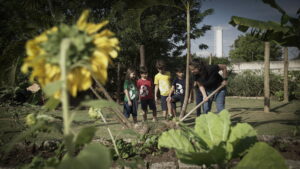
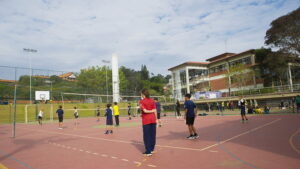
Located on a 42,000 m² green campus in Granja Viana, Cotia, the school features facilities designed to support an experiential learning environment. These include multimedia rooms, science laboratories, an art studio, four multisport courts, a covered court, a soccer field, and two media centers housing over 11,000 titles. The campus also includes a restaurant that provides nutritious meals, including vegetarian options, using organic ingredients from the school's own garden.
Co-curriculars
The school offers a rotating selection of optional extracurricular activities each semester across three main areas: sports, technology, and culture. Sports offerings range from kung-fu to artistic gymnastics, while technology activities focus on creative robotics and informatics. Cultural activities are designed to broaden students' understanding of global diversity and foster mutual respect.